
Neural Pathways
Taking a Walk Through the Mind

I. Mountains of the Mind
II. Thoughtways
III. Thought Highways
IV. Desire Paths
Mountains of The Mind
“The thoughts of some people are constant, but of others varying and contradictory. It is like landscape. Some live their lives in the sight of a great range of mountains.” - Stephen Graham
There is a recurring theme in everything I have read this June: the landscapes we inhabit form the scenery of our minds. I began the month with Robert Macfarlane’s debut book, Mountains Of The Mind (2003). The title is lifted from Gerard Manley Hopkins’ famous sonnet of despair, which proclaims “O the mind, mind has mountains; cliffs of fall/ Frightful, sheer, no-man-fathomed” (1885). Hopkins was a nature poet formed by the brooks and fields of southern England. Depression distorted his mental pastoral into plains where insanity beckoned at each cliff edge. The eruption of internal mountains conveys not only the extremity of Hopkins’ mental state but also his inability to acclimatise to a hostile mind.
Highlands and lowlands have lent themselves to undulations in the human mood throughout literature, particularly since Burke’s treatise on The Sublime (1757). In Wordsworth’s “Lines Composed a Few Miles Above Tintern Abbey” (1798), a poem where the speaker returns to a landscape he had interiorised to find it changed, the motif of height, of aboveness, mirrors his soaring mind. Loftiness features three times: "Lofty cliffs", "lofty thoughts’" and "lofty cliffs" once more. From his vantage point in Monmouthshire, the speaker is elevated in space. And thought. And space.
Two centuries later Ram Dass used the same image as an allegory for the road to enlightenment. In Stages of The Journey (1975) the American neo-Hindu lays spiritual development out over mountain plains: “Many of us have traversed this path without maps… thinking the end was reached when it was merely the first mountain peak we were looking to which hid all of the higher mountains in the distance.” This circles back to Macfarlane and his thoughtful walking. If the mind is a landscape, then every consecutive thought is a journey through its microcosm. This idea hides in plain sight in the metaphor "neural pathway."
Thoughtways
A mimetic mind with its own malleable geology is a comforting idea. It offers autonomy. It also provides a reason for travel greater than the self; if new scenery shapes and weathers the landscape of the mind, an individual should feel a sense of duty to the places they travel through: the microcosm and macrocosm flourish in symbiosis. And finally, more personally, it would mean that you can spend time in someone else’s mind.
When you meet a new person they point out the way and you adapt to their terrain. It may be lakes, mountains, forests, or cities. They show you their favourite vistas and the gates that hide dead ends. By travelling through the formative locations of another you can bypass their death, or their physical absence, and spend a while in their mind. I imagine my pathways as conventional tracks, the quaint British kind that braid across fields and dally through London parks. But the thoughtways of others may look like a current in a lake. Or a standstill on the M1.
Last week I read Artful (2012) by Ali Smith, a text that weaves four essays ("On Time", "On Form", "On Edge", "On Reflection") into a short story about grief. The author displaces her genius onto two characters, an arboriculturalist and an academic. The former reads the four unpublished works of her dead lover, retracing the pathways of her mind so accurately that she appears as a ghost and reads alongside.
The gradual symbiosis of a thirty-year relationship concludes with the complete integration of mental landscapes: in death, the academic exists in the leafy mind of the woman she has left behind and they traverse together. The academic's mind (Smith's by extension) is a connective phenomenon, yoking literary sources up from here and down from there into a genre-defying ecosystem. In this text, the seamless mental pathways move vertically, like interactions between the layers of woodland strata.
Thought Highways
Some paths are so well trodden that they hold more significance in the mental world than in the physical one. Journeys can represent homogenised thought. When young men moved through Europe on The Grand Tour their destination was an intellectual milieu at home. The tour became shorthand for an exclusive mode of thinking; the same could be said of the Chiang Mai sleeper train and the Hà Giang Loop for today's upcoming generation. The Lonely Planet guidebooks capture this irony well. The travel-guide empire was founded by a British couple who travelled from England to Australia in the early 1970s. With the help of journalists like Geoff Crowther, the pair laid out an ‘off the beaten track’ guide which has widened into a highway with each sale. The fifty year-old neural firings of Maureen and Tom Wheeler are eternalised in their route and when a tourist follows it they are unoriginal in place and thought.
Desire Paths
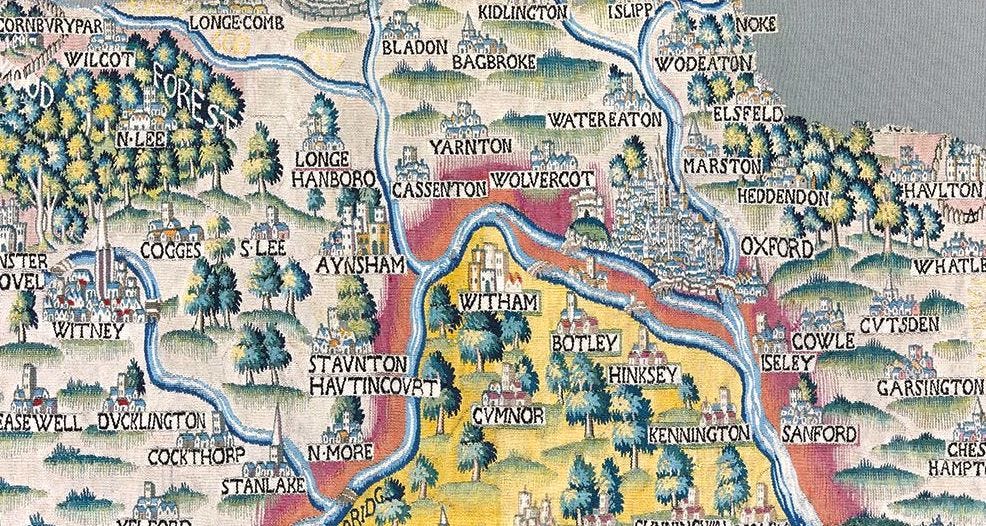
At the other end of the scale is the 'desire path.' Desire paths cut corners. They physicalise a shared human instinct to move across space in a certain way. Walkers tramp along an invisible route until it erodes into a track. You will have seen desire paths that bisect roundabouts or turn sharply up a hill to bypass the tarmac path that winds around for buggies and wheelchair users. Desire paths are the manifestation of our microcosms onto reality and are often the origins of powerful trails such as New York’s Broadway. I have been walking and running along the Oxford Canals since I began university in 2020, a period dedicated to bringing my mind to higher definition. During these four years my mental landscape has developed, synapses pruned away by increased exposure to the world. The network of waterways feels smaller, and the desire paths are clearer on the ground.
“The physical domain of the country had its counterpart in me. The trails I made led outward into the hills and swamps, but they led inward also…myself and the land. In time the two became one in my mind.” - John Haines


